
Play Rouletto Free Online by Vimplay
Explore Rouletto by Vimplay in our free roulette library. This is a no-stakes demo, with no real-money prizes offered here.
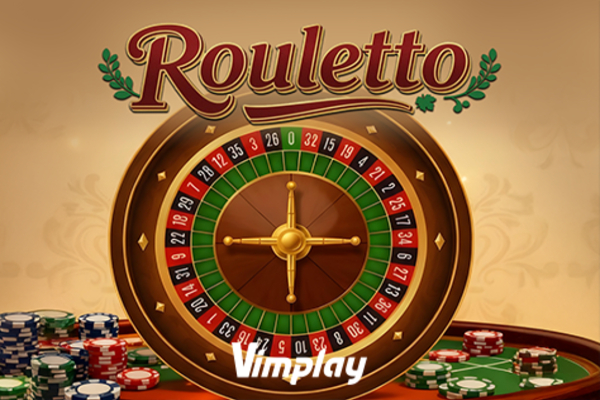
The free roulette demo loads directly on this page. JavaScript is required to display the interactive game.
Top 3 roulette casino offers
18+ real-money sites · Third-party ratings. Free spins are for slots; check roulette eligibility.

BetMGM
Get 200 Free Spins When You Play £10
Offer terms
Live casino and table games, including roulette, contribute 0% to qualifying play. The free spins are for slots.
18+ New customers: Deposit £10+ and wager 1x on casino games (wagering contributions vary) within 7 days from registration. Get 200 Free Spins on Big Bass Splash (worth 10p each), valid 3 days, no wagering on winnings. Opt-in required. 18+. T&Cs apply.

BOYLE Casino
Up to 100 free spins
Offer terms
Free spins are for slots. Roulette eligibility and wagering contributions must be checked with the operator.
18+. Opt in. Acc. games, & payment restrictions apply. 100 Free Spins (FS): Exp. 01.12.26. New UK/ROI gaming players. Same day min. stake req. (€/£ 20/50/100 to get 20/50/100 FS) by 23:59. FS Values £/€0.10. FS valid 72h. Lucky Rush: 06/03/26 - 17/01/27. Min. stake €0.10. Prize paid in GBP/EUR. Win-to-bet ratio points awarded per spin. Points lost if player leaves. Min. 1 point to qualify. Opt into each leaderboard separately. 1 real-money spin to enter. T&Cs Apply

Hyper Casino
Deposit £10 Get 50 Free Spins
Offer terms
Free spins are for slots. Roulette eligibility and wagering contributions must be checked with the operator.
New players only · Deposit & wager at least £10 to get free spins · Offer must be activated before depositing · Free Spins winnings are cash · No max cash out · Eligibility is restricted for suspected abuse · Skrill deposits excluded · Free Spins value £0.20 per spin · Free Spins expire in 48 hours · T&C’s Apply!
Start with the rule sheet, not assumptions
Rouletto by Vimplay is best approached as a rules-reading exercise. The name tells you the format is roulette, but it does not by itself confirm the table layout, side features, or exact controls. Treat the demo as a way to inspect what this specific build actually offers before you compare it with broader roulette convention.
The embedded demo sits on this permanent page, so there is no separate destination to hunt for. The virtual credits used here have no cash value, which makes the screen useful for learning the interface, checking bet placement, and understanding how the game presents outcomes without needing to speculate about real-money terms.
What can be inferred from roulette, and what cannot
Research from Vimplay and GX Studios describes Rouletto as a roulette title, and one source presents it as a European-style RNG rendition with standard roulette betting areas. That kind of evidence supports careful comparison, but it still should not be stretched into claims about every control or statistic unless the demo itself shows them.
That distinction matters because roulette games often share familiar foundations while differing in presentation. A classic inside bet, for example, works the same way across formats, yet the way a studio arranges the table, history panel, or helper controls can vary. European Roulette is a useful reference point for the genre, but not a substitute for reading Rouletto’s own interface.
Reading the table before placing any virtual stake
On a roulette demo, the most practical first step is checking how the table responds to input. If you are using a mouse or touch device, look for how chips are selected, whether bets can be stacked, and whether the game asks for confirmation before a spin. Those interface choices are more reliable than assumptions based on the title alone.
The same caution applies to helpers or shortcuts. A source mentions Turbo, Rebet and 2x controls for Rouletto, yet you should still verify whether those options are visible in your version of the demo and how they behave. For comparison, Tiny Roulette by Vimplay and Spinzo by Vimplay are sensible sibling pages to inspect for presentation differences, not assumed rules.
Why history panels matter in a demo
Roulette history can be useful, but it should be treated as a record of past spins rather than a forecasting tool. Many players glance at recent results because it helps them follow the pace of the demo and confirm that the interface is updating correctly. That is a practical use; it is not a guarantee of future outcomes.
If Rouletto shows neighbours-of-zero information or recent-spin tracking, those features are worth noticing because they support table literacy. They do not change the basic maths of roulette, which remains random from spin to spin. A cleaner way to compare formats is by interface style, as in European Roulette Silver, rather than by chasing imagined pattern systems.
Comparing formats without over-reading the title
The most honest comparisons are structural. European roulette conventionally uses a single zero and a wheel layout built around numbers 0 to 36, while other roulette families may organise the board differently. That general knowledge is useful background, but it should be kept separate from anything Rouletto specifically confirms on screen or in its help text.
If you want to understand where this game sits in the wider catalogue, compare the way it presents bets, pacing and visual density with other pages such as European Roulette Small Bets or European Roulette VIP. Those comparisons are about design and table framing, not about assuming identical mechanics from the name alone.
Using the demo as a reading room, not a shortcut
Because the demo is free and embedded, it works well as a rule-checking space. You can pause, inspect labels, and make sure you understand what each area of the table is telling you before you interact. That is particularly helpful with roulette, where a busy layout can make a familiar game feel more complicated than it is.
The safest habit is to separate confirmed information from default roulette expectations. If a feature is visible, read it; if it is only suggested by the genre, treat it as provisional. That approach keeps your understanding precise and helps you judge whether Rouletto’s design suits you better than its relation to European Roulette or other Vimplay titles.
18+ and safer play in a UK context
This demo is for adults only. If you ever move from free play to gambling, set time and money limits first, and stop if the session stops feeling recreational. Never try to win back losses, and do not use a roulette session as a way to solve financial pressure; if gambling feels hard to control, step away and seek support promptly.
For UK players, the most useful mindset is measured and information-led. In demo mode, the aim is to learn the interface and understand the rules, not to chase results or rely on staking systems. Keep it simple: read the table, decide whether it is clear enough for you, and close it if it is not.