
Play European Roulette Free Online by Ororo
Explore European Roulette by Ororo in our free roulette library. This is a no-stakes demo, with no real-money prizes offered here.
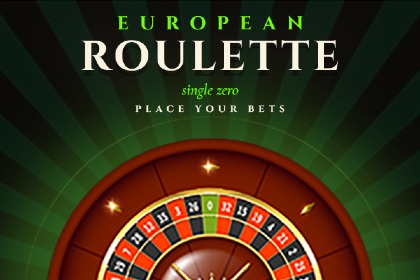
The free roulette demo loads directly on this page. JavaScript is required to display the interactive game.
Top 3 roulette casino offers
18+ real-money sites · Third-party ratings. Free spins are for slots; check roulette eligibility.

BetMGM
Get 200 Free Spins When You Play £10
Offer terms
Live casino and table games, including roulette, contribute 0% to qualifying play. The free spins are for slots.
18+ New customers: Deposit £10+ and wager 1x on casino games (wagering contributions vary) within 7 days from registration. Get 200 Free Spins on Big Bass Splash (worth 10p each), valid 3 days, no wagering on winnings. Opt-in required. 18+. T&Cs apply.

BOYLE Casino
Up to 100 free spins
Offer terms
Free spins are for slots. Roulette eligibility and wagering contributions must be checked with the operator.
18+. Opt in. Acc. games, & payment restrictions apply. 100 Free Spins (FS): Exp. 01.12.26. New UK/ROI gaming players. Same day min. stake req. (€/£ 20/50/100 to get 20/50/100 FS) by 23:59. FS Values £/€0.10. FS valid 72h. Lucky Rush: 06/03/26 - 17/01/27. Min. stake €0.10. Prize paid in GBP/EUR. Win-to-bet ratio points awarded per spin. Points lost if player leaves. Min. 1 point to qualify. Opt into each leaderboard separately. 1 real-money spin to enter. T&Cs Apply

Hyper Casino
Deposit £10 Get 50 Free Spins
Offer terms
Free spins are for slots. Roulette eligibility and wagering contributions must be checked with the operator.
New players only · Deposit & wager at least £10 to get free spins · Offer must be activated before depositing · Free Spins winnings are cash · No max cash out · Eligibility is restricted for suspected abuse · Skrill deposits excluded · Free Spins value £0.20 per spin · Free Spins expire in 48 hours · T&C’s Apply!
Why this single-zero demo earns a place in the catalogue
European Roulette by Ororo is worth a look because it sits in the simplest, most recognisable corner of the roulette catalogue: the single-zero wheel. That makes it a useful reference point when comparing house edges, layout styles and how different studios present the same core game. Ororo’s published figure for this title is 97.3% RTP.
What matters here is not spectacle but clarity. The permanent demo is embedded automatically on this page, so you can study the layout without chasing a separate lobby link. The virtual credits have no cash value, which keeps the focus on reading the table, understanding the bet grid and deciding whether the interface suits you.
How the table is set out and where the uncertainty starts
The game description points to the standard European structure: numbers 1 to 36 in red and black, plus a green 0. That is enough to explain the broad maths of single-zero roulette, but not enough to assume every on-screen interaction beyond the published rules. Where a studio adds its own interface touches, those are best treated as presentation choices until confirmed in the demo.
That uncertainty is exactly why a catalogue comparison helps. If you know the ordinary inside and outside bets, you can use the demo to see how Ororo arranges them. For a broader point of reference, compare it with European Roulette by iSoftBet and European Roulette by Habanero, both of which share the same title but still deserve separate reading.
Controls that matter before you place a chip
The supplied game notes mention a practical control set: choose a chip, build your bets and press Play. They also refer to Double Bet, Rebet and Rebet & Play, which suggests a familiar roulette workflow aimed at reducing repetitive input. Even so, the best approach is to treat those as on-screen controls to inspect, not as a substitute for reading the rules panel.
That rules panel matters because roulette is easy to play badly through haste rather than complexity. The in-game rules and payout table are described as always one tap away, which is exactly the sort of detail that affects whether a demo feels usable. If you are comparing interfaces, European Roulette by Spearhead Studios and European Roulette by Evoplay give useful title-level comparisons.
Bet families: what is confirmed and what is only general roulette knowledge
The catalogue text explicitly lists straight-up numbers, splits, streets, corners, lines and the First Four, alongside columns, dozens, red/black, even/odd and low/high. Those are the classic families of roulette bets, so the demo appears to cover the standard spread rather than a niche variant.
Neighbour bets are also mentioned, with the description explaining that they back a chosen number and the four pockets either side of it on the wheel. That is useful context, but it should still be read as a studio rule description rather than a universal roulette term. If you want another presentation of the same classic format, see European Roulette by Platipus and European Roulette by TaDa Gaming.
Using the demo as a reading exercise rather than a shortcut
This permanent-page demo is best treated as a format reader. It lets you examine how the wheel, betting layout and helper buttons are grouped, which matters more than any promise of easy results. Because the credits are virtual, the value lies in learning the interface rhythm: select, place, review, then decide whether to continue or reset.
That makes the title especially relevant if you are comparing how different studios handle the same classic. Ororo’s version is a clean baseline, while other catalogue entries may emphasise visual styling, table spacing or navigation in different ways. The useful question is not which is ‘better’ in the abstract, but which version makes the rules easiest to follow under your own pace.
18+ play and sensible limits on a familiar classic
Roulette is for adults only, and it is worth keeping a simple limit in mind before any session starts. Decide a budget, avoid chasing losses, and step away if the game stops feeling like entertainment. If gambling is affecting you, support is available through recognised UK safer-gambling services and blocking tools.
That advice is especially relevant with a game like this because the format can feel familiar very quickly. Familiarity can lead to speed, and speed can lead to sloppy decisions.
Where this Ororo title sits in the wider roulette line-up
European Roulette by Ororo is valuable less as a reinvention than as a clean catalogue benchmark. It shows the single-zero style in a straightforward form, with published information that supports comparison across studios rather than hype. That makes it a practical page for readers who want to judge presentation, controls and rule visibility side by side.
If you are mapping similarities across the same named games, this one deserves attention alongside the broader family of European Roulette entries. It is related in genre, not automatically identical in layout or interface to every other studio’s version. For another useful comparison point, revisit European Roulette by iSoftBet after you have checked how Ororo handles the same familiar table.